
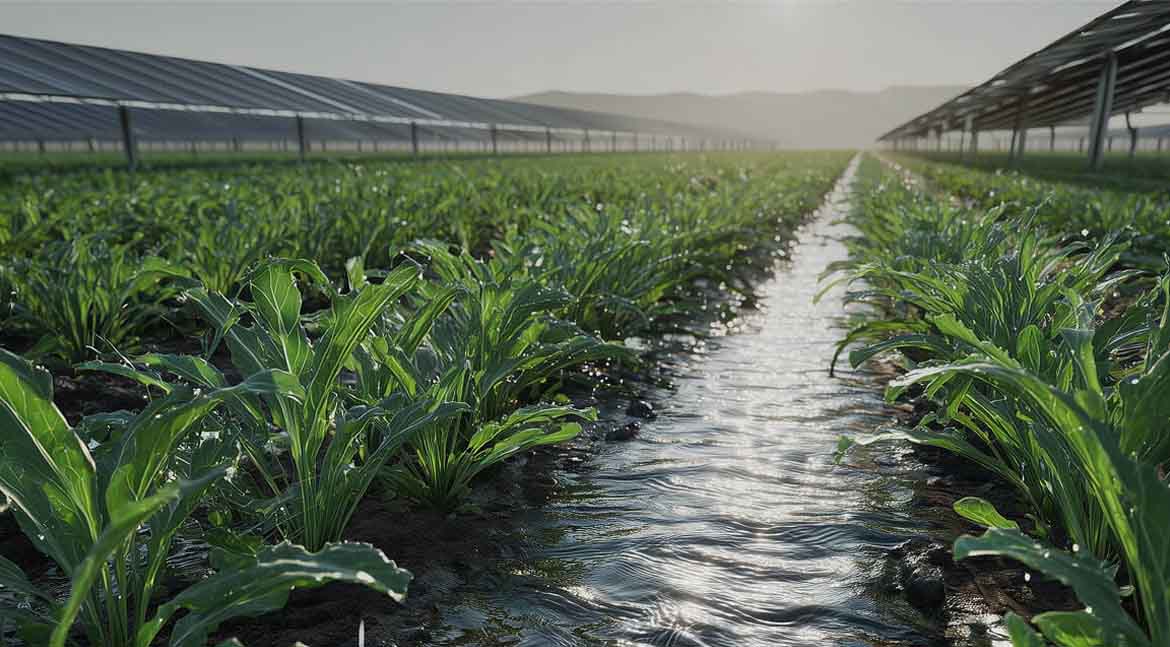
Urban agriculture is becoming increasingly vital in the arid states of the Gulf Cooperation Council (GCC), where water scarcity, harsh climatic conditions, and limited arable land pose serious challenges to food production.
The Current Landscape
Small-scale urban farms already play an important role in strengthening local food security, yet the adoption of modern agricultural technologies has been slow. A recent study set out to understand why, examining both the drivers and barriers that shape farmers’ decisions to adopt innovations such as drip irrigation, soil moisture sensors, drought-resistant crops, and precision farming systems.
Key Drivers of Adoption
The research revealed that the strongest motivation for farmers to adopt new practices lies in clear, tangible benefits. When farmers believe that a technology will improve yields, save resources, or boost overall productivity, they are far more likely to use it.
- Ease of use plays a key role—systems that are simple to operate, even for those with limited technical training, stand a much greater chance of being integrated into daily practice.
- Social influence is powerful. Farmers are often encouraged to adopt a new approach when they see trusted peers, community leaders, or agricultural extension officers using and promoting it.
- Institutional support further strengthens adoption. Access to infrastructure, training, and financing removes significant barriers.
Overcoming Barriers
Interestingly, cultural compatibility—often seen as a major obstacle—was less decisive in this study. Farmers were willing to adjust traditions if they were convinced of the performance benefits. The greatest barriers, instead, were linked to perceived risks, such as the fear of high costs, technical failures, or environmental concerns.
Research Insights : The study, which surveyed 448 small-scale farmers across the GCC, underscores that successful agricultural innovation in arid regions depends not only on technology itself, but on the broader ecosystem that surrounds it.
Policy Recommendations
Policymakers and agricultural organizations can accelerate adoption by:
- Communicating benefits clearly
- Providing hands-on training
- Ensuring reliable support systems
- Implementing subsidies, insurance schemes, and risk-sharing measures
Research Insights : The study, which surveyed 448 small-scale farmers across the GCC, underscores that successful agricultural innovation in arid regions depends not only on technology itself, but on the broader ecosystem that surrounds it.
Conclusion
Building sustainable agriculture in arid climates is as much about trust, support, and cultural awareness as it is about technical innovation. When farmers are empowered with the right tools, knowledge, and security, urban agriculture can thrive even in the harshest conditions—helping secure a more resilient food future for arid regions worldwide.